CHOW Chat: Cathy Green on Maritime History and Heritage

The Capitol Hill Ocean Week 2026 theme “Voyages & Breakthroughs” showcases the cutting-edge advancements and emerging leaders that are shaping the future of ocean stewardship, and spotlights transformative change across science, culture and heritage, resiliency, and innovation.
As we sail into the future, the National Marine Sanctuary Foundation honors the earliest stewards of our waters and charts the course for the next generation of wavemakers. Together, we will launch bold breakthroughs, ignite discovery, and secure waters for all.

The National Marine Sanctuary Foundation is proud to work with the National Maritime Historical Society as the CHOW 2026 program partner.
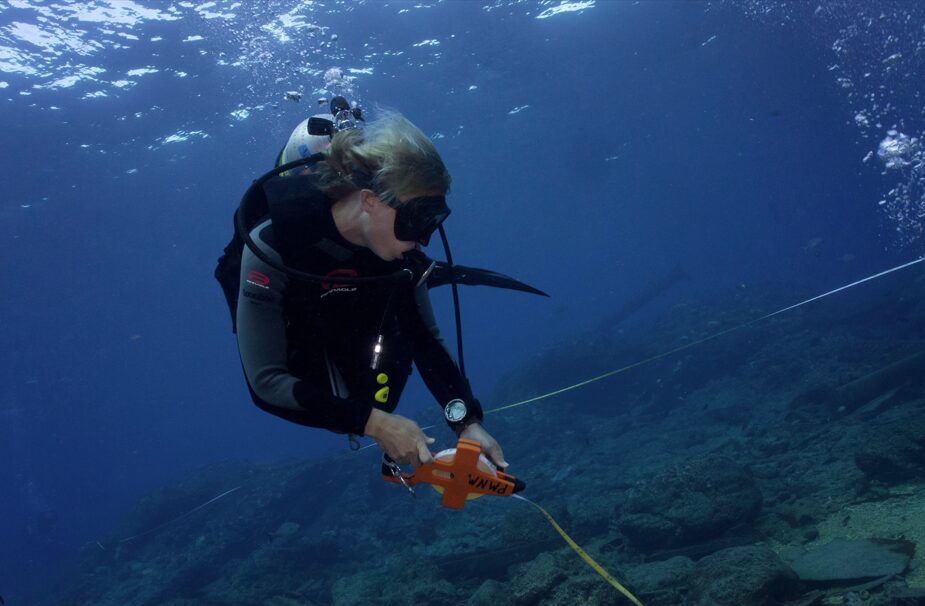
Cathy Green is President and Executive Director of the National Maritime Historical Society and has worked on the research and preservation of submerged cultural resources for more than 25 years, including with the Wisconsin Maritime Museum and Thunder Bay National Marine Sanctuary.
Register Now for CHOW!
What are you most looking forward to during Capitol Hill Ocean Week 2026?
What excites me most about Capitol Hill Ocean Week 2026 is the opportunity to bring maritime heritage fully into the conversation alongside science, policy, and innovation. At the National Maritime Historical Society, that’s central to our mission—and through our publication Sea History magazine, we’ve spent decades telling the stories that connect people to the water.
CHOW offers a powerful platform to extend that reach. I’m especially looking forward to engaging with colleagues across disciplines and demonstrating that cultural resources—our shipwrecks, working waterfronts, and maritime traditions—are not just reflections of the past, but essential to how we think about stewardship today and into the future.
How have you shaped this year’s Capitol Hill Ocean Week program through the partnership between the National Maritime Historical Society and the National Marine Sanctuary Foundation?
Our partnership with the National Marine Sanctuary Foundation has been an opportunity to ensure that maritime heritage has a strong and visible place within the CHOW program. At NMHS, we bring a national network of historians, archaeologists, educators, and institutions—and through our publications and programs, we help translate their work into stories that resonate with a broad public audience.
In shaping this year’s program, we’ve worked to include those voices and perspectives, while emphasizing the continuum between past and present. Whether it’s through panels, storytelling, or partnerships, our goal has been to highlight how maritime history informs today’s policy conversations and inspires future stewardship.

At NMHS, we often say that America’s story cannot be told without the sea—and we have been documenting that truth for more than 50 years. Maritime history and archaeology give us a direct, tangible connection to that story, from the earliest exploration and trade to the development of our ports, industries, and coastal communities.
These aren’t just stories of the past—they are lessons that continue to shape the present. Through our work and publications, we highlight how issues like resource management, trade, migration, and environmental change have long maritime roots. That perspective is critical as we navigate today’s challenges. By understanding our maritime past, we are better equipped to make thoughtful decisions about our future.
What are some opportunities that exploration of our ocean and Great Lakes create to drive technological innovations and support environmental stewardship?
Exploration has always been at the heart of maritime history, and today it continues to drive innovation in remarkable ways. From advanced sonar and remotely operated vehicles to digital mapping and data sharing, the tools we use to explore the ocean and Great Lakes are evolving rapidly.
At NMHS, we not only support this work—we help bring it to life for the public. By sharing discoveries and the technologies behind them, we help people understand why exploration matters. These innovations are not only uncovering submerged cultural resources—they are also essential for monitoring ecosystems, understanding environmental change, and informing responsible policy. Exploration and stewardship go hand in hand.
 How does exploring maritime heritage support coastal communities and our public waters?
As a former maritime museum director, I witnessed daily how maritime heritage acts as a powerful connector—between people and place, past and present. Likewise, through NMHS programs and the storytelling we do in Sea History, I’ve seen how these connections strengthen communities. They support heritage tourism, reinforce local identity, and create a deeper sense of pride and stewardship.
Just as importantly, they help people understand that our waters are shared public resources with a rich and meaningful history. When that history is made visible and accessible, it fosters a sense of responsibility to protect it. In that way, maritime heritage doesn’t just preserve the past—it actively supports the vitality of coastal communities and the long-term stewardship of our oceans and Great Lakes.